
Beyond the Four Seasons in Australia’s High Country Kitchens
A traditional menu speaks in four broad chapters: spring asparagus, summer tomatoes, autumn pumpkins, winter brassicas. In Australia’s cool and alpine regions, the kitchen experiences something more precise and much less obedient. A warm spell can push tender leaves, marrows and berries towards maturity within days, while a sharp cold snap can slow growth, damage a crop or transform the flavour of roots left in the ground. The calendar remains useful, but it is only a framework. The real menu is written by soil temperature, wind, frost, rainfall and the moment a grower decides a crop is ready to pick.
For regional dining rooms, especially those operating near Australia’s high country and cool-climate growing districts, this means navigating a series of short, intense harvesting bursts. Fifty kilograms of brassicas may arrive when the menu has already been printed; baby marrows may appear in abundance just as the kitchen has committed to a root-vegetable course. That tension between fine-dining precision and nature’s erratic generosity is not a problem to eliminate. Properly managed, it becomes a source of flavour, margin and identity. The strongest kitchens learn to make structural room for surprise without making the guest experience feel uncertain.
The Anatomy of a Fortnightly Micro-Glut
A micro-harvest is not simply a small season. It is a concentrated window in which a crop moves from promising to plentiful, often within a fortnight. In a cool or alpine climate, the trigger may be a run of warm days and nights, a late summer heat wave, or enough soil moisture to accelerate growth. January in Australia’s cool and alpine zones can bring the hottest daytime and overnight conditions of the year, accompanied by dry air and wind. That combination increases irrigation pressure but can also hurry fruiting vegetables towards the pass. By March, autumn conditions bring another shift, with marrows, pumpkins, squash and root crops moving into a decisive harvest period, while early frosts begin to change the behaviour of more tender plants.
These rhythms make farm relationships operational rather than merely sentimental. A smallholder needs a restaurant capable of receiving produce at its best, even when the quantity is inconvenient. A chef needs clear communication about crop forecasts, harvest maturity, storage life and likely substitutions. The useful conversation happens before the glut arrives. Agree on what constitutes an acceptable grade, whether seconds can be processed, how much notice is possible, and which products can be redirected to pickling, staff meals, sauces or preserves. A grower who knows there is a credible outlet for surplus can harvest more confidently, while the kitchen gains access to produce that may never appear on a standard wholesale list.
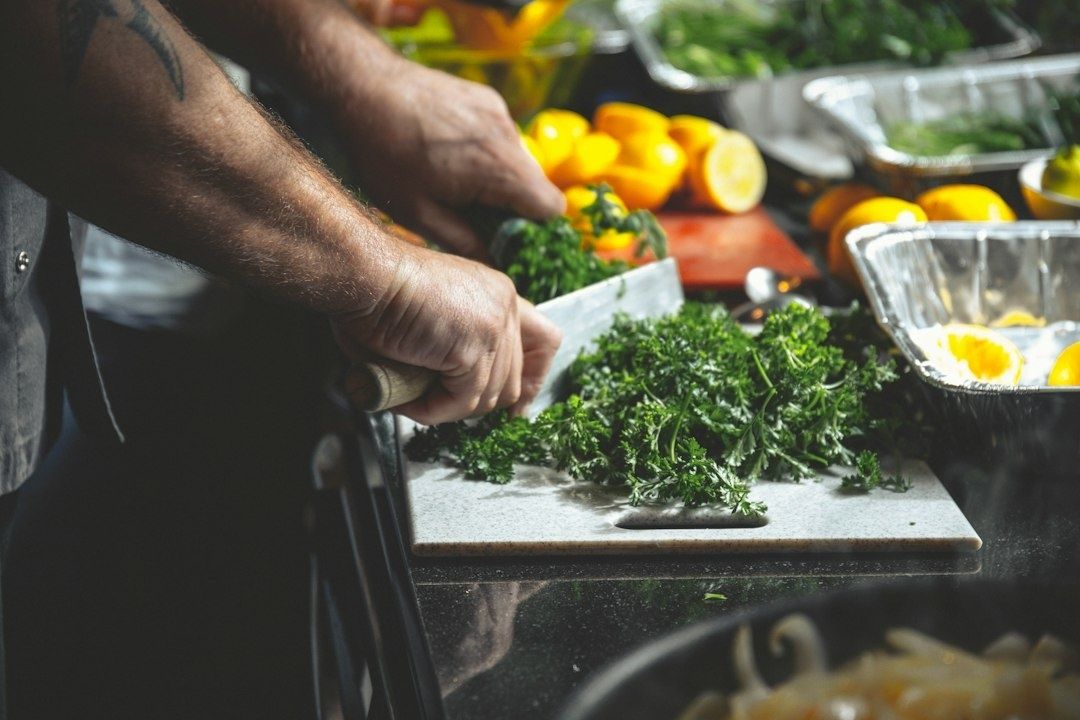
The economics are equally important. Conventional wholesale purchasing offers predictable pack sizes, prices and delivery patterns, but it can conceal the costs of distance, packaging, storage and unsold stock. Farm-gate flexibility may bring a better price per kilogram, yet it transfers more responsibility to the restaurant. Receiving a sudden glut requires labour for sorting, washing, trimming, blanching, fermenting and recording. The margin is protected only when the whole crop is assigned a purpose quickly.
- Reserve the freshest portion for immediate service, where texture and aroma command the highest menu value.
- Grade cosmetically imperfect produce for purées, fillings, broths, pickles and staff meals.
- Record yield after trimming so future buying decisions reflect usable kilograms, not delivery weight.
- Confirm storage capacity before accepting a large delivery, particularly for leafy brassicas and tender marrows.
- Build a substitution language into menus so the dining room can describe the crop honestly without overpromising a fixed garnish.
This kind of regional agility is visible in food communities that place local produce, makers and hospitality at the centre of civic identity. Launceston’s recognition within the UNESCO Creative Cities framework illustrates how a regional food culture can connect growers, chefs, producers and visitors. The city’s City of Gastronomy programme offers a useful reference point for understanding how culinary hubs can celebrate local supply chains rather than treating provenance as a decorative line on a menu.
Building Modular Foundations in the Cool-Climate Larder
The answer to a fortnightly glut is not to invent a new cuisine every time a grower calls. It is to build a larder of neutral, deeply flavoured foundations that can absorb a changing garnish. A cultured or neutral butter can carry charred brassica leaves, shaved radish or grilled marrow without dictating the final dish. A vegetable garum can bring savoury length to steamed greens, while a light dashi can turn a handful of herbs, peas or tender stems into a composed course. These bases provide continuity while the visible produce changes.
Preservation begins at the point of receiving. Heat, moisture and bruising are the enemies of a fragile harvest, so crates should be inspected, cooled and separated as soon as they reach the kitchen. Remove damaged leaves, keep delicate herbs away from condensation, and avoid sealing warm produce in plastic. Blanching and rapid chilling can protect colour and texture in suitable vegetables. Salting, lacto-fermentation, vinegar pickling, drying and oil-based preparations each create a different future for the crop. The aim is not to make a seasonal ingredient last indefinitely. It is to halt deterioration within hours and preserve enough of its character to extend the useful window.
March gardening guidance for cool and alpine climates highlights the range of produce that may overlap during an autumn transition, from marrows and pumpkins to root vegetables and unripe tomatoes. It also notes that parsnips can benefit from remaining in the ground through colder weather, a reminder that seasonality is sometimes a flavour-making process rather than a harvesting deadline. A modular kitchen uses that knowledge to design preparations that mature gracefully.
| Anchor foundation | Ephemeral garnish | Service direction |
|---|---|---|
| Neutral cultured butter | Charred brassica leaves or baby marrow | Warm, glossy and rich, finished with herbs or sharp pickles |
| Light kombu and mushroom dashi | Young peas, shoots or tender stems | Delicate and aromatic, suited to a restrained first course |
| Vegetable garum | Roasted roots or grilled cabbage | Deep savoury finish, balanced with vinegar and fresh leaves |
| Bright cider vinegar dressing | Raw radish, herbs or crisp leaves | Cool, fresh and cleansing beside richer proteins |
| Smoked pumpkin or squash purée | Seeds, flowers or late-season greens | Earthy and rounded, with texture added at the pass |
The foundation should remain recognisable but flexible. A sauce can move from fish to roasted cabbage; a purée can support a grain course, a grilled cut or a vegetable plate. This is where disciplined technique protects creativity. The kitchen is not improvising from nothing. It is selecting the most persuasive combination from a prepared set of textures, acids, fats and savoury notes.
Sustainable Infrastructure Supporting Resilient Terroirs
Flavour begins before the harvest, and in cool-climate agriculture it is closely tied to reliable water and healthy soil. Dry cold snaps can be particularly demanding because plants may lose moisture while growth slows, leaving them stressed without the obvious visual drama of a summer heat wave. Conversely, sudden heavy rain can increase disease pressure and leach nutrients. Mulch, compost, cover crops, wind protection and careful soil structure all help growers hold moisture and maintain steady plant growth. For a restaurant with a kitchen garden, these practices are part of the menu system, not a separate sustainability project.
Water capture offers practical resilience, provided it is designed around actual demand and maintained properly. The United States Department of Energy’s Rainwater Harvesting Systems Technology Review outlines systems that collect, filter, store and distribute rooftop runoff for uses such as landscape irrigation, washing and toilet flushing. The review stresses that effective planning depends on rainfall, roof area, intended use, storage capacity, permits and the balance between supply and demand. For a hospitality site, that means sizing tanks with care rather than installing an oversized asset that is costly to maintain or a small tank that repeatedly runs dry.
- Use roof catchment, leaf screens and first-flush diversion to keep stored water cleaner.
- Separate irrigation and non-potable systems from drinking-water supplies, with suitable backflow protection.
- Monitor tank levels, pumps, filters and overflow routes as part of routine facilities management.
- Match irrigation to crop stage and soil moisture rather than relying on a fixed schedule.
- Retain organic matter in the soil so captured water supports plants for longer between rainfall events.
Conservation-focused irrigation can influence the plate directly. Moderate, well-timed watering helps plants avoid severe stress while encouraging concentrated flavour and firm texture. Excess water can dilute intensity and create soft growth, while inadequate water may produce bitterness, splitting or reduced yield. The best result is not scarcity for its own sake. It is a stable growing environment in which the plant develops slowly enough to build character, then reaches the kitchen at its peak.
Training the Line to Pivot Plating on Overnight Notice
A flexible menu depends on flexible mental models. Instead of teaching the line that a dish equals one immutable list of ingredients, train each station to understand the dish’s architecture. The plate may require a primary element, a warm vegetable, a sauce, a fresh counterpoint, a textural accent and a finishing aroma. If baby marrow replaces a brassica stem, the structure remains intact even though the cooking time, cut and garnish change.
Plating templates should therefore describe purpose as well as appearance. A green component might need char, a little bitterness and enough heat to stand beside a rich sauce. A raw element might provide lift and crunch. A fermented garnish may supply acidity and length. This language allows chefs to pivot without losing balance. It also gives junior cooks a clearer route into decision-making, because they can assess whether an ingredient fulfils the role rather than waiting for an exact visual instruction.
- Receive and assess the crop, recording quantity, condition, usable yield and likely shelf life.
- Assign the produce to immediate service, short-term storage, preservation or secondary use.
- Test the ingredient against the existing sauce, protein or vegetable centrepiece before changing the whole plate.
- Brief the pass with the revised garnish, cooking method, portion size and plating photograph or sketch.
- Give front-of-house a concise explanation focused on flavour, origin and the reason for the change.
Front-of-house communication matters when lunch and dinner no longer share the same garnish. Guests rarely object to a substitution when it is presented as a genuine expression of the day’s harvest. They do notice uncertainty, especially when a server cannot explain whether a component is intentional or simply unavailable. A useful briefing includes pronunciation, texture, preparation, likely allergens, vegetarian suitability and a pairing suggestion. The language should be appetising and direct: charred young brassica with cultured butter, or shaved marrow with cider vinegar and dill, rather than a vague promise of seasonal vegetables.
Cost control must sit alongside creative freedom. Every pivot should be measured against portion yield, prep minutes, storage loss and the value created on the plate. A glut can improve food cost when the purchase price is favourable, but only if the kitchen avoids overproduction and assigns secondary uses early. Labour morale also improves when adaptation is treated as skilled work rather than emergency damage control. Give the team a clear decision window, protect mise en place standards and allow cooks to contribute ideas within defined boundaries. Care, cleanliness and professional judgement remain essential whether the dish is a simple vegetable plate or a highly composed tasting-menu course.
Embracing the Transience of the Cool Climate Table
The finest reward of a two-week micro-harvest is not novelty alone. It is intensity. A freshly picked brassica can carry sweetness, pepper and mineral depth that disappears when it is held too long. A young marrow can be tender enough for a hot grill and bright enough for a raw garnish. A root vegetable left through cooler conditions may develop a deeper, more concentrated flavour. When the kitchen allows those qualities to lead, the menu becomes a record of place and weather rather than a generic sequence of seasonal references.
Diners respond to that honesty because it gives the meal a sense of occasion. The dish cannot be replicated indefinitely, and that scarcity feels meaningful when it is explained without theatrics. For chefs preparing to move beyond rigid seasonal cycles, the roadmap is practical: establish grower communication, create modular sauces, invest in cold storage and preservation, measure usable yield, train the line around plate functions, and brief the dining room before every service. The result is a kitchen that remains composed under pressure while giving nature the final word. In a cool-climate dining room, adaptability is not a concession to uncertainty. It is the clearest way to make terroir taste alive.